
Tree on the way to Humpback Rock that Sidney has been climbing for a few years.

Ambivalence is a side-product of the labour of classification; and it calls for yet more classifying effort. Though born of the naming/classifying urge, ambivalence may be fought only with a naming that is yet more exact, and classes that are yet more precisely defined: that is, with such operations as will set still tougher (counter-factual) demands on the discreteness and transparency of the world and thus give yet more occasion for ambiguity. The struggle against ambivalence is, therefore, both self-destructive and self-propelling. It goes on with unabating strength because it creates its own problems in the course of resolving them. Its intensity, however, varies over time, depending on the availability of force adequate to the task of controlling the extant volume of ambivalence, and also on the presence or absence of awareness that the reduction of ambivalence is a problem of the discovery and application of proper technology: a managerial problem. Both factors combined to make modern times an era of particularly bitter and relentless war against ambivalence.
Modernity and Ambivalence by ZYGMUNT BAUMAN


“The struggle to emerge out of the past, clean of memories; the inadequacy of our hearts to cut life into separate and final portions; the pain of this constant ambivalence and interrelation of emotions; the hunger for frontiers against which we might learn as upon closed doors before we proceed forward; the struggle against diffusion, new beginnings, against finality in acts without finality or end, in our cursedly repercussive being.”
The Dairy of Anaïs Nin, Vol. 1: 1931-34
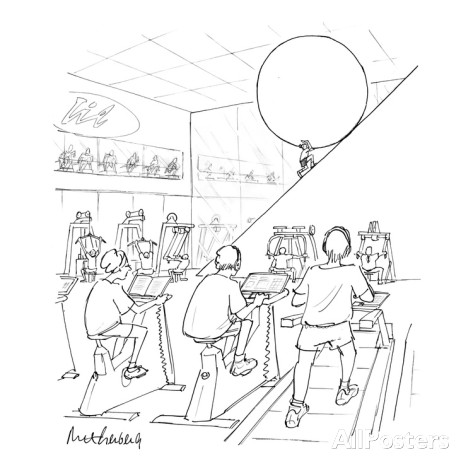
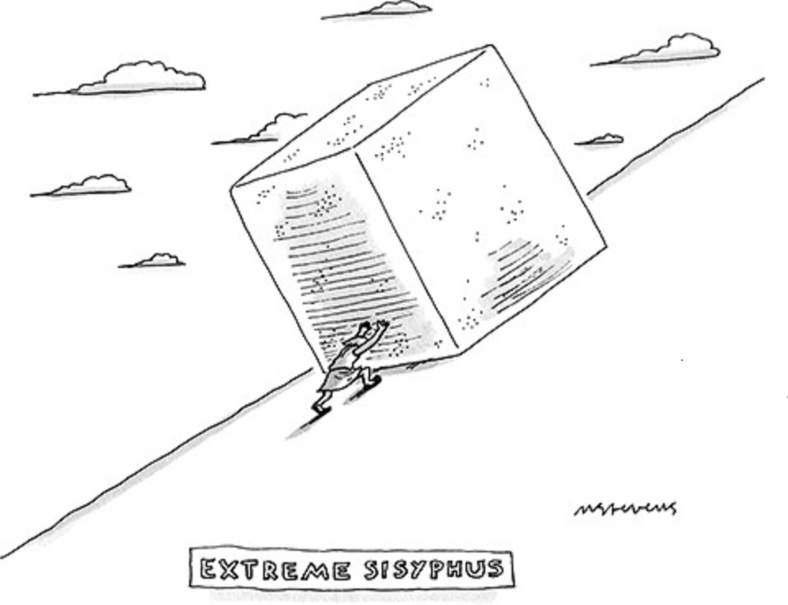
Nowadays men often feel that their private lives are a series of traps. They sense that within their everyday worlds, they cannot overcome their troubles, and in this feeling, they are often quite correct: What ordinary men are directly aware of and what they try to do are bounded by the private orbits in which they live; their visions and their powers are limited to the close-up scenes of job, family, neighborhood; in other milieux, they move vicariously and remain spectators. And the more aware they become, however vaguely, of ambitions and of threats which transcend their immediate locales, the more trapped they seem to feel.
The Sociological Imagination
New York Times Video: click here
Dr. John Kitchin quit a medical career to pursue his passion: skating along the boardwalk of San Diego’s Pacific Beach. He calls himself “Slomo.”
Video by Joshua Izenberg for the New York Times

You can her the album on YouTube: click here

 Stephen Poulson
You must be logged in to post a comment.