


Author Stephen Poulson
The Iranian Reform Movement
Poulson, Stephen C. 2009. “Nested Institutions, Political Opportunity, and the Decline of the Iranian Reform Movement” American Behavioral Scientist 53(1):27-43.

Institutional Parochialism Articles
Institutional Parochialism Defined:
Stephen Poulson and Colin Campbell (2010, p. 33) characterized institutional parochialism as a form of normative isomorphism (DiMaggio & Powell, 1983) that compels academic communities to study their own societies. Basically, a parochial impulse at the individual level – the normative desire to study people who are similar culturally – can make scholarship in the social sciences West-centric.

Poulson, Stephen C. (with Cory Caswell and Latasha Grey). 2014. “Isomorphism, Institutional Parochialism, and the Study of Social Movements” 13(2): 222-242.
Poulson, Stephen C. (with Colin Campbell) 2010. Am. Sociologist – Institutional Parochialism The American Sociologist, 41(1):31-47.
Poulson, Stephen C. 2011. “Institutional Parochialism in Social Science: Response to Cornwall,” Journal for the Scientific Study of Religion 50(2):227–228.
Immanent Frame Blog Post on Parochialism and the Sociology of Religion
Modernity and Ambivalence
It is because of the anxiety that accompanies it and the indecision which follows that we experience ambivalence as a disorder – and either blame language for lack of precision or ourselves for linguistic misuse. And yet ambivalence is not the product of the pathology of language or speech. It is, rather, a normal aspect of linguistic practice. It arises from one of the main functions of language: that of naming and classifying. Its volume grows depending on the effectivity with which that function is performed. Ambivalence is therefore the alter ego of language, and its permanent companion – indeed, its normal condition.
Introduction in Modernity and Ambivalence by ZYGMUNT BAUMAN
Panel of Experts
Brain Savage Cartoon (New Yorker Cartoon Bank)

Sociologists on Strike!
From the New Yorker Cartoon Bank

Fight For Your Right to Party: A Study of a Party Riot at JMU
Picture taken by Robert Boag for The Breeze during the Springfest Riot

Poulson, Stephen C. (with Thomas Ratliff and Emily Dollieslager). 2013. “You Have to Fight! For Your Right! To Party! Structure, Culture and Mobilization in a University Party Riot,” Pp. 271-305 in Research in Social Movements, Conflicts and Change, edited by Patrick McCoy. Bingley, UK: Emerald Press.
Iraq: Patterns of Violence against Civilians

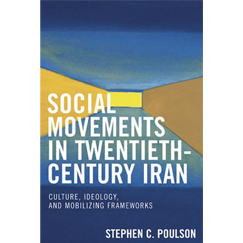
Book: Social Movements in Iran
This study investigates cycles of social protest in Iran from 1890 to the present era. The social movements include: the 1890-1892 Tobacco Movement; the 1906-1909 Constitutional Revolution; two post-World War II movements, the Tudeh (Masses) and the National Front; the 1963 Qom Protest; the 1978-1979 Iranian Revolution and the Iranian Reform Movement. These movements confronted two primary questions: How should the Iranian state achieve independence in the world and what rights should individual Iranians enjoy in their political and social system? This is an examination of the framing of these questions and their answers by various Iranian political actors over time.
 Stephen Poulson
You must be logged in to post a comment.